
Understanding UK Visa Processing Times
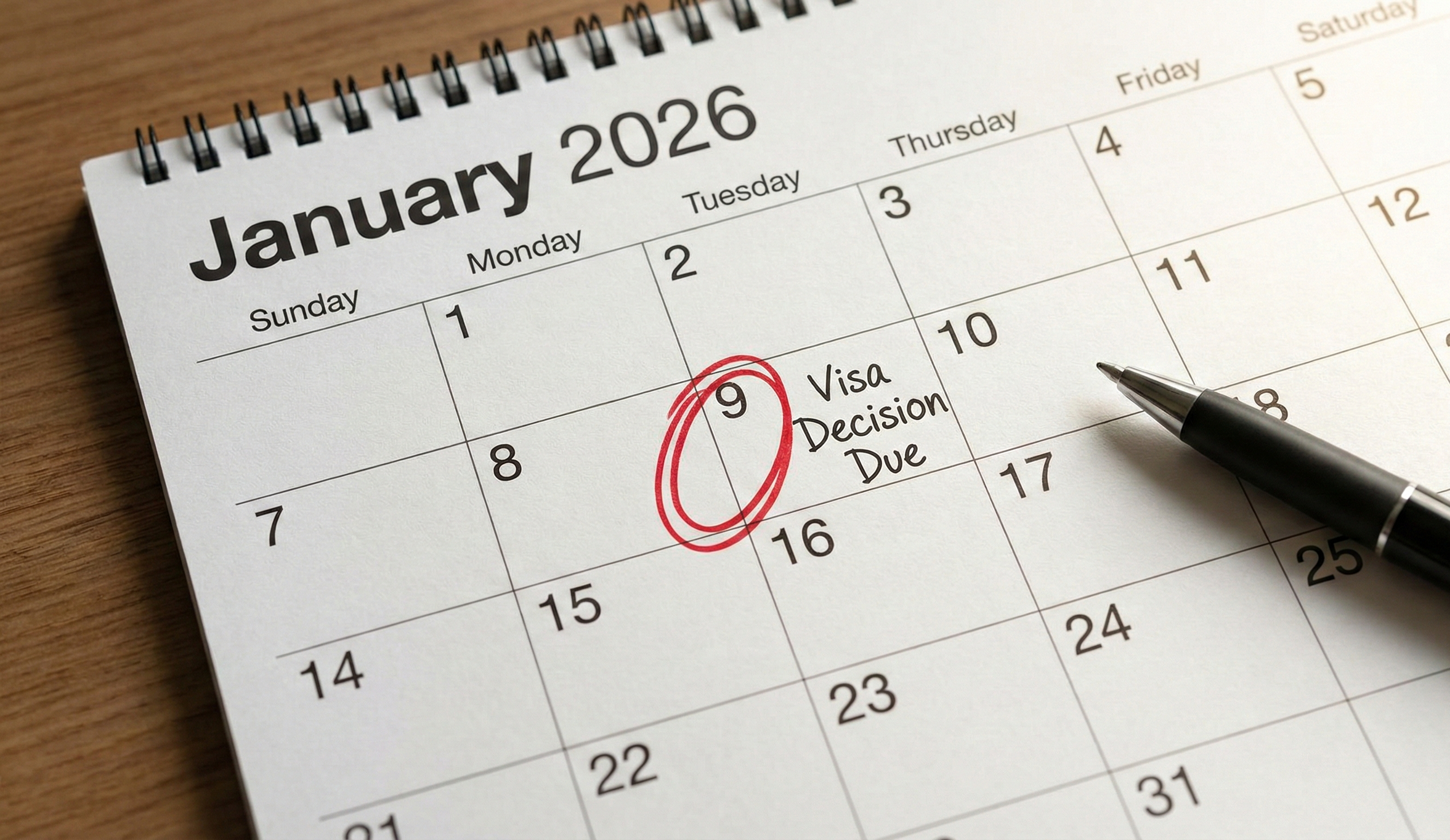
Navigating UK Visa Processing Times: A Comprehensive 2026 Guide
For anyone planning a move to the United Kingdom, whether for a career, education or to join family, the most frequent and pressing question is: "How long will it take?" In 2026, the UK immigration landscape has undergone a digital transformation. With the full implementation of eVisas and a more integrated UKVI (UK Visas and Immigration)account system, the way applications are processed and the speed at which decisions are delivered—has evolved. However, while the technology has changed, the complexities of administrative backlogs and individual case scrutiny remain.
This guide provides a detailed analysis of UK visa waiting times, the primary factors that trigger visa processing delays and a step-by-step roadmap for tracking your UK visa decision timeline.
Defining the Processing Timeline: When Does the Clock Start?
Understanding your waiting time begins with knowing exactly when the "clock" starts. Many applicants mistakenly believe the processing time begins the moment they hit "submit" on their online application form. In reality, the Home Office calculates the timeline based on two specific triggers:
For Digital Applications (ID Check App): If you use the "UK Immigration: ID Check" smartphone app to verify your identity, your waiting time starts once you have finished uploading all your documents and clicked the final submission button.
For Appointment-Based Applications: If you are required to attend a Visa Application Centre (VAC) or a UKVCAS center, your processing time officially begins the day you provide your biometric information (fingerprints and photograph).
The timeline ends when you receive a formal email or letter notifying you that a decision has been reached. In the 2026 digital era, this notification is almost always via email, with your status immediately reflecting in your UKVI account.
Standard UK Visa Decision Timelines in 2026
While every case is unique, the Home Office operates under "customer service standards" for straightforward applications. Below are the standard timelines for the most common visa categories in 2026.
Applications Made Outside the UK (Entry Clearance)
Standard Visitor Visa: Standard Service is 3 Weeks (15 Working Days)
Student Visa: Standard Service is 3 Weeks (15 Working Days)
Skilled Worker: Standard Service is 3 Weeks (15 Working Days)
Spouse / Partner / Family Visa: Standard Service is 12 to 24 Weeks
Global Talent / Innovator Founder: Standard Service is 3 Weeks (15 Working Days)
Applications Made Inside the UK (Switching or Extending)
Skilled Worker Extension / Switch: Standard Service is 8 Weeks
Student Visa Extension: Standard Service is 8 Weeks
Indefinite Leave to Remain (ILR): Up to 6 Months
Graduate Visa 8 Weeks
Note: "Settlement" routes, such as Family Visas from abroad or ILR from within the UK, are naturally more time-consuming as they require a deeper audit of the applicant's life and financial stability.
Core Factors Influencing UK Visa Waiting Times

There are multiple factors that may influence UK Visa Waiting Times
If your application exceed the standard window, it is rarely due to a single cause. Instead, several variable often converge to create visa processing delays.
A. Seasonal Peak Demand
The UK immigration system follows a predictable rhythm. The most intense peak occurs between July and September, driven by hundreds of thousands of international students applying for the autumn university intake. During this period, even "straightforward" work or visitor visas may experience a 1-to-2-week spillover beyond the 3-week standard.
B. Case Complexity and Scrutiny
An application is flagged as "non-straightforward" if it requires additional investigation. This is not necessarily a sign of impending refusal, but it does reset the timeline. Common reasons for scrutiny include:
Adverse Immigration History: Previous overstays, visa refusals (even in non-UK countries) or deportations.
Criminal Record: Any convictions, even minor ones, that require a review against the "Good Character" requirement.
Verification of Evidence: If a caseworker needs to contact a third party such as a former employer, a bank in a foreign country or a university to verify the authenticity of a document.
C. Missing or Incomplete Documentation
In 2026, the Home Office is increasingly strictly enforcing "Specified Evidence" rules. If you fail to provide a required document (e.g., a specific bank statement or a TB certificate), the caseworker may send a "Request for Information" (RFI). This pauses your application until the document is received and reviewed, often adding 2 to 4 weeks to the total wait.
D. Policy Shifts and System Reforms
The 2026 "Earned Settlement" transition and the shift to B2 language requirements for many work routes have increased the average time spent per case as caseworkers adapt to new assessment points. Internal redistribution of Home Office staff to humanitarian schemes or asylum backlogs can also temporarily reduce capacity for standard work and family routes.
How to Track Your UK Visa Application
In 2026, tracking has moved away from physical letters to a mix of digital status checks and paid enquiry services.
Tracking Outside the UK (VFS Global / TLScontact)
Most out-of-country applications are managed by commercial partners. You can track your progress by logging into the account you created during the booking process:
TLScontact: Offers a "Track My Application" feature that shows stages like "Application Received," "Sent to UKVI," and "Passport Dispatched."
VFS Global: Provides similar dashboards. However, these portals only show the location of your documents, not the status of the decision.
Tracking Inside the UK (UKVI Account)
For digital-first applications made within the UK:
Log into your UKVI Account.
Check for "Status Updates" or "Outstanding Actions."
If your identity was verified via the app, the system will update once the decision is pushed to your digital profile.
Paid Enquiry Services
If your application has exceeded the published service standard, you can use the UKVI's official paid enquiry service.
Email Enquiries: Costs approx. £2.74 per enquiry. This is the most effective way to get a confirmation that your case is still being processed and hasn't been "lost" in the system.
Phone Enquiries: Available for those who prefer verbal confirmation, though wait times can be significant.
Expedited Services: Priority and Super Priority
If your travel is urgent, the Home Office offers premium services to accelerate the UK visa decision timeline.
Priority Service
Cost: Approx. £500 (in addition to the application fee).
Outcome: A decision is usually made within 5 working days.
Availability: Offered for most work and study visas and some family visas (where it may take up to 30 working days from abroad).
Super Priority Service
Cost: Approx. £1,000 (in addition to the application fee).
Outcome: A decision is reached by the end of the next working day.
Best For: Critical business hires, urgent medical travel or high-value talent routes.
What to Do if You Experience a Delay
A delay can be a source of immense stress. If your application has surpassed the 8-week (in-country) or 3-week (out-of-country) mark without contact, follow these steps:
Check Your Spam Folder: RFIs (Requests for Information) are frequently missed because they land in junk mail.A missed RFI can lead to an automatic refusal for non-compliance.
Verify the Service Standard: Check the official GOV.UK processing times page to see if there is a temporary national backlog reported for your specific route.
Lodge a Paid Enquiry: As mentioned, this creates a paper trail and forces the Home Office to manually check the status of your UAN (Unique Application Number).
Involve Your MP (In-Country Only): If you are in the UK and your application has been delayed for months without explanation, contacting your local Member of Parliament is a legitimate and often effective way to "nudge" the Home Office.
The 2026 Landscape: Digital eVisas and Beyond
The most transformative change for 2026 is that you no longer wait for a physical Biometric Residence Permit (BRP) to arrive in the mail.
Instant Access: Once the "Decision Received" email arrives, your status is activated.
No "Document Return" Wait: For many, the old "10-day wait for the card" is gone. You can prove your right to work or rent immediately using a "share code" from your online profile.
Border Integration: Your digital status is linked to your passport. This means the time between "Decision" and "Ready to Travel" has effectively been shortened by several days.
Summary Checklist for Success
To ensure your application stays within the UK visa waiting times and avoids the "non-straightforward" queue:
Pre-Verify Documents: Ensure every bank statement and payslip is clear, dated within the last 28 days and perfectly matches the application form.
Avoid "Funds Parking": Sudden large deposits without explanation are the #1 cause of financial verification delays.
Check Peak Seasons: If applying in August, add a 2-week buffer to your expectations.
Digital Accuracy: Ensure the email address used for your UKVI account is one you monitor daily.
Understanding the UK visa decision timeline in 2026 requires a balance of realistic expectations and proactive management. While the digital eVisa system has streamlined the final delivery of status, the core assessment of an applicant's suitability remains a human-driven process subject to global volumes and case complexity.
By preparing a "decision-ready" application and utilizing tracking tools effectively, you can navigate the path to the UK with confidence.
How Can Noble Rose Immigration Service Help?
Noble Rose Immigration Service acts as your strategic advance guard in the often-unpredictable world of UK immigration. Regulated by the UK Immigration Advice Authority, we specialise in transforming the anxiety of UK visa waiting times into a structured, manageable plan. We assist by conducting rigorous "pre-submission audits" of your evidence to ensure your file is "decision-ready," significantly reducing the risk of visa processing delays caused by Requests for Information (RFIs).
Whether you are looking to utilise Priority or Super Priority services for a rapid turnaround or need professional intervention to track a stalled application, we provide the high-level representation required to navigate the Home Office’s 2026 digital systems. From troubleshooting UKVI account issues to providing a realistic UK visa decision timeline based on current internal backlogs, Noble Rose Immigration Service ensures your move to the UK is defined by precision and peace of mind.