
UK Ancestry Visa Eligibility Guide

2026 Definitive Guide to the UK Ancestry Visa: Reclaiming Your British Heritage
For many citizens of the Commonwealth, the United Kingdom is not just a destination but a historical home. In 2026, the UK Ancestry visa remains one of the most prestigious and flexible routes for those who can trace their lineage back to a grandparent born on British soil. Unlike the rigid Skilled Worker route or the financially demanding Spouse Visa, the Ancestry route honors the constitutional and historical ties between the UK and its global family.
However, as the Home Office transitions to a fully digital eVisa system and tightens its "Suitability" assessments under Part Suitability of the Immigration Rules, the ancestry visa application is no longer a simple box-ticking exercise. It requires a sophisticated narrative of lineage and a robust demonstration of economic intent.
Strategic Value of the Ancestry Route
The UK ancestral visa is uniquely positioned within the UK’s 2026 points-based system. It is a "pathway to settlement" that grants an initial five years of leave, leading directly to Indefinite Leave to Remain (ILR) and, eventually, British Citizenship.
Why Choose This Route?
Total Work Freedom: You are not tied to a single employer or a specific salary threshold. You can be an employee, a CEO or a self-employed entrepreneur.
No Sponsorship Complexity: You do not need to find a company willing to pay for a sponsorship license.
Immediate Rights for Dependants: Your partner and children gain the same unrestricted work and study rights as you.
A Lifelong Link: The visa can be extended indefinitely if you choose not to settle, providing a permanent "safety net" connection to the UK.
Five Pillars of Eligibility
To meet the UK ancestry visa requirements in 2026, you must satisfy five primary legal tests. Each of these is scrutinised by Entry Clearance Officers with a focus on "genuine intent."
Pillar 1. The Nationality Test
This visa is not open to all; it is an exclusive benefit for those with a specific Commonwealth connection. You must be:
A Commonwealth citizen (e.g., Australian, Canadian, New Zealand, South African, Indian).
A British Overseas citizen or British Overseas Territories citizen.
A British National (Overseas).
A citizen of Zimbabwe.
Pillar 2. Age Threshold
You must be aged 17 or over on the date of your intended arrival. While there is no upper age limit, older applicants face higher scrutiny regarding the "intent to work" requirement.
Pillar 3. The Ancestry Link (The Grandparent Rule)
This is the core of the UK ancestral visa. You must demonstrate that at least one of your grandparents was born:
In the United Kingdom, the Channel Islands or the Isle of Man.
In what is now the Republic of Ireland, provided they were born before 31 March 1922.
On a ship or aircraft that was either registered in the UK or belonged to the UK government.
Pillar 4. The Maintenance Requirement
The Home Office must be satisfied that you can support yourself and your family without "recourse to public funds." In 2026, while there is no fixed "minimum income" like the £29,000 spouse rule, you must prove you have sufficient liquid assets to cover your arrival, initial housing and living costs until you find work.
Pillar 5. Intent to Work
You must be able to work and genuinely intend to seek and take employment or self-employment in the UK. This is often where applications from retired individuals or those with significant independent wealth face challenges.
Navigating the Lineage: Biological and Legal Ties
The "Ancestry Link" is often more complex than it appears on the surface. In 2026, the Home Office recognises several modern family structures, provided the legal chain is unbroken.
Adoption and Birth Outside of Marriage
Adoptions: You can claim ancestry through a grandparent if you or your parent were legally adopted. The adoption must be recognised under UK law (typically via the Hague Convention or the "Designated List").
Illegitimacy: You can claim ancestry through a grandparent even if your parents or grandparents were never married. The historical "illegitimacy" of a birth no longer bars a claim in the modern UK immigration system.
Step-parents: Legal Boundary
It is a common misconception that one can claim ancestry through a step-grandparent. The rules are firm: the link must be biological or through a recognised legal adoption. Step-relationships, no matter how long-standing or emotionally significant, do not qualify for this specific visa route.
"Intent to Work" Strategy
Since the ancestry visa application does not require a job offer, you must provide a "portfolio of intent." In the 2026 economic climate, simply stating you want to work is insufficient.
Demonstrating Economic Prospect
A successful application will build a narrative around your professional value to the UK. This includes:
Market Readiness: Evidence that your skills are in demand in the UK.
Proactive Engagement: Showing that you have already begun the process of integrating into the UK job market from abroad.
Self-Employment Viability: If you plan to be a freelancer or business owner, you must show that your business model is sustainable in a UK context.
Noble Rose Insight: If you are nearing retirement age but still wish to move via the Ancestry route, your "intent to work" must be exceptionally well-documented to overcome the caseworker's assumption that you are moving for retirement rather than economic activity.
Financial Maintenance: "Adequacy" Standard
The requirement to maintain yourself without state benefits is assessed on an "adequacy" basis. The Home Office compares your projected income and savings against the level of Universal Credit a British family in similar circumstances would receive.
In 2026, "adequate" usually translates to having a significant "cushion" of savings. This must cover:
Initial Accommodation: The high cost of the UK rental market, often requiring 6 months of rent upfront for those without a UK credit history.
Ongoing Living Costs: Food, transport and utilities for the entire family unit.
The "No Public Funds" Barrier: A firm commitment that you will not apply for state benefits, which is a condition of your visa.
2026 Digital Application Journey
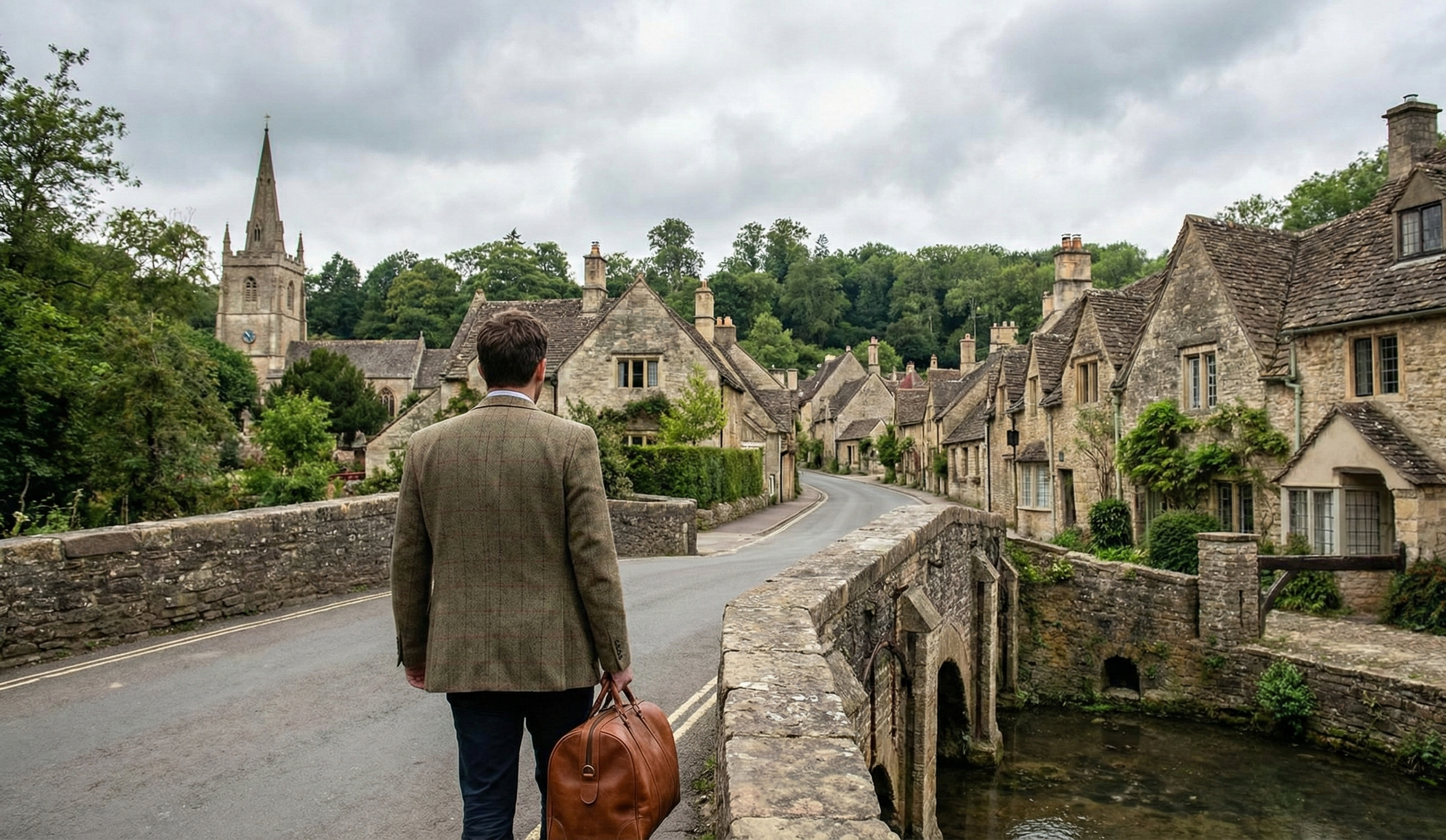
Your UK Ancestry Immigration Application Journey
The UK Ancestry Visa Application has evolved significantly. By 2026, the “physical” aspect of the visa has almost entirely vanished, replaced by a sophisticated digital ecosystem.
Step 1: Online Submission
Any ancestry visa application must be made from outside the UK. You cannot "switch" into the Ancestry route if you are already in the UK as a visitor or student.
Step 2: 2026 Fee Structure
Applying for an Ancestry visa is a significant financial investment.
Application Fee: £682 (current 2026 rate).
Immigration Health Surcharge (IHS): This allows you to use the National Health Service (NHS). For a 5-year visa, the cost is £1,035 per year, totalling £5,175 payable upfront at the time of application.
Step 3: Biometric Enrolment
Even in a digital age, you must attend a Visa Application Centre (VAC) to provide fingerprints and a facial photograph. This "locks" your identity to your digital eVisa.
Step 4: The Transition to eVisa
Upon approval, you will no longer receive a physical Biometric Residence Permit (BRP). Instead:
You will receive an email confirmation of your status.
Your visa is digitally linked to your passport.
You will use a "Share Code" to prove your right to work to employers or your right to rent to landlords.
Bringing Your Family: Dependant Rights
One of the greatest strengths of the UK ancestral visa is the ability to keep your family unit together.
Who Qualifies as a Dependant?
Spouses and Civil Partners: Your marriage or partnership must be legally recognized.
Unmarried Partners: You must prove you have lived together in a relationship akin to marriage for at least two years.
Children: They must be under 18 at the time of the initial application and not living an "independent life."
Dependants are granted leave in line with the main applicant. If you are granted 5 years, they are granted 5 years. They enjoy full access to the UK labor market, allowing for a "dual-income" household which greatly assists in meeting the maintenance requirements.
5-Year Roadmap to Indefinite Leave to Remain (ILR)
The Ancestry visa is a 5-year grant. At the end of these five years, you face a choice: extend the visa or apply for permanent settlement (ILR).
"Continuous Residence" Rule
To qualify for ILR, you must not have spent more than 180 days outside the UK in any 12-month period during those five years. This "clock" starts from the day your visa is granted or the day you enter the UK.
The 2031 Settlement Criteria (5 Years from 2026)
Life in the UK Test: A test of your knowledge of British history, culture and government.
English Language: You must demonstrate a Level B1 proficiency (unless you are from a majority English-speaking country).
Active Employment: You must prove that you have been economically active (working or seeking work) throughout your five years.
Once you have held ILR for 12 months, you are typically eligible to apply for British Naturalisation, granting you a British Passport and the right to vote.
Common Reasons for Refusal and Strategic Avoidance
In 2026, the Home Office is increasingly using "General Grounds for Refusal" (Suitability) to decline applications.
The "Suitability" Trap
Under Part Suitability of the Immigration Rules, even minor issues can lead to a refusal. This includes:
Failing to disclose a minor traffic offense from years ago.
Having an outstanding debt to the NHS of £500 or more.
Previous immigration breaches in any country (not just the UK).
The "Recourse to Public Funds" Risk
If your bank statements show a pattern of reliance on state benefits in your home country, the Home Office may conclude that you are likely to do the same in the UK, leading to a refusal on maintenance grounds.
Historical Record Discrepancies
Names often change across generations due to marriage, divorce or religious conversion. If the names on your birth certificates do not perfectly align with the names on your parent’s or grandparent’s certificates and no explanation is provided, the "chain of lineage" is considered broken.
Living in the UK on an Ancestry Visa: 2026 Conditions
Your life in the UK will be governed by specific conditions attached to your eVisa.
No Public Funds: You cannot claim most benefits, including Universal Credit or Personal Independence Payment (PIP).
Police Registration: This has been abolished for almost all nationalities by 2026, but you must still keep the Home Office updated on any changes to your address or passport.
Work Restrictions: There are virtually none. You can work as a doctor, a professional athlete or a business owner. The only general restriction is that you cannot work as a professional sportsperson or sports coach unless you meet specific criteria, though this is rare for Ancestry holders.
How Noble Rose Immigration Service Secures Your Future?
At Noble Rose Immigration Service, we understand that an ancestry visa application is about more than just a visa; it’s about your family's history and your future legacy.
Our team provides a premium legal service that goes beyond simple form-filling. We specialise in:
Lineage Forensics: Resolving complex issues where birth records are missing, damaged or inconsistent across generations.
The "Economic Intent" Portfolio: We work with you to build a professional profile that proves to the Home Office that you are an asset to the UK economy.
Part Suitability Audits: We conduct a deep-dive into your history to ensure no "hidden" issues trigger a mandatory or discretionary refusal.
Digital eVisa Management: Ensuring your 2026 digital status is correctly established, allowing for seamless travel and employment from day one.
The UK Ancestry route is a generous gift of history, but the door is only open to those who can prove they belong. Let Noble Rose Immigration Service be the key that unlocks that door for you.