
Digital Nervous System
Written by Bill Zahr
Last Updated 26 January 2026
Mastering the SMS and Strategic Management of Certificates of Sponsorship
Executive Summary
This report explores the Sponsorship Management System (SMS) as the digital nervous system of UK immigration. It details the legal hierarchy of Level 1 Users and their role in maintaining licence integrity.

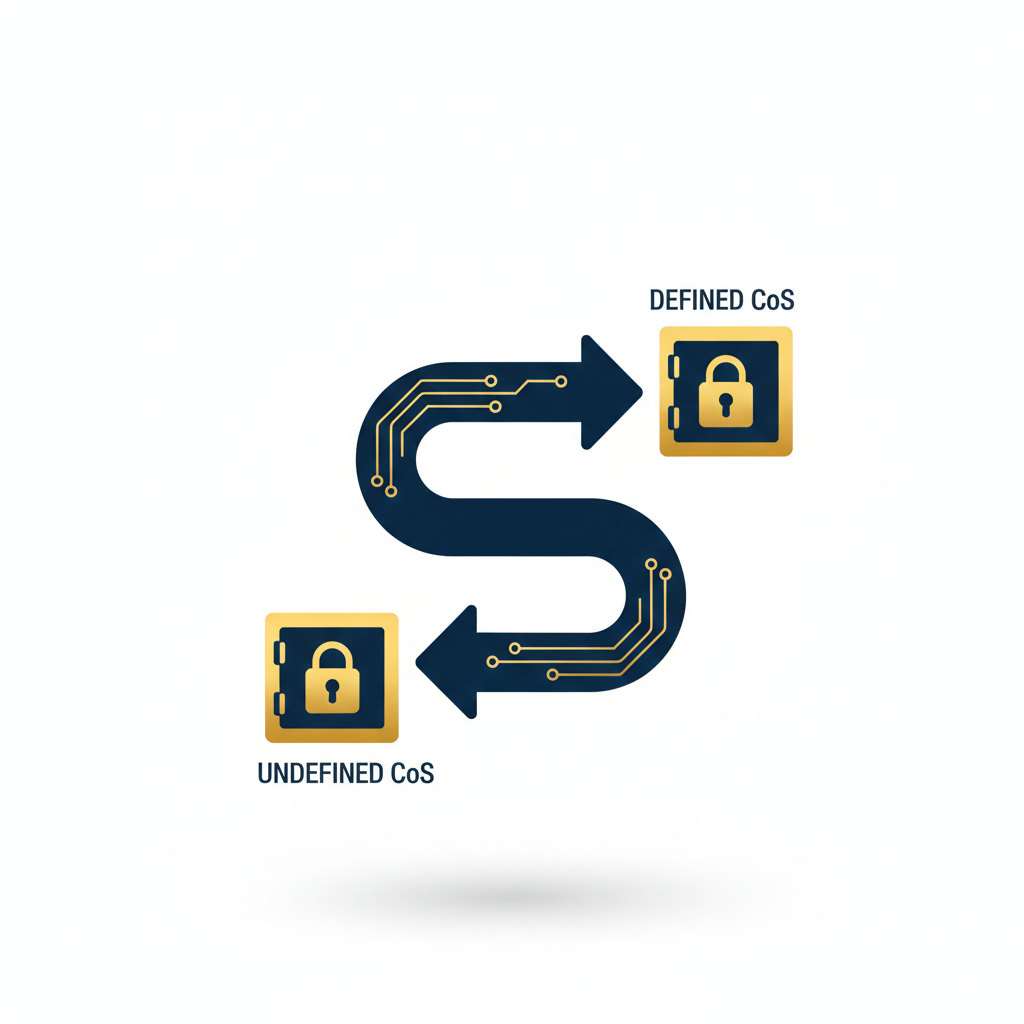
Distinguishing between a Defined Certificate of Sponsorship and an Undefined Certificate of Sponsorship is critical for operational success. Procedural errors here are non-correctable and often trigger a Sponsor Licence Compliance Audit.
Effective UK Immigration Compliance requires managing annual allocations and the 10-day reporting window. We explore how professional SMS oversight prevents Sponsor Licence Revocation and ensures "audit-ready" data.

In the landscape of 2026 UK corporate immigration, the Sponsorship Management System (SMS) is no longer merely a database; it is a real-time compliance monitor. Since the Home Office integrated the SMS with HMRC’s Real-Time Information (RTI) and the "eVisa" digital border system, the platform has become the primary tool for enforcement. For any business holding a Skilled Worker Visa licence, the SMS is where legal status is either maintained with precision or lost through administrative oversight.
Hierarchy of the SMS: Roles and Responsibilities
A common reason for a Sponsor Licence Application Refusal is the incorrect appointment of key personnel. The Home Office views the roles within the SMS not as administrative titles, but as legal accountability markers.
Authorising Officer (AO)
The AO is the "ultimate accountable person." In 2026, the Home Office requires the AO to be a senior person within the organization. They do not necessarily need to be the person clicking the buttons in the SMS, but they are legally responsible for every Certificate of Sponsorship (CoS) issued. If a worker is found to be working illegally or a salary threshold is missed, the AO is the individual who may face civil or criminal penalties.
Level 1 User: Strategic Controller
The Level 1 User is the most powerful role within the SMS. They can assign CoS, report changes in circumstances, and even appoint other users. Many corporate clients choose to have a Corporate Immigration Lawyer act as an external Level 1 User. This provides a "legal firewall," ensuring that every entry made on the system is vetted against current immigration rules before it is submitted.
Key Contact (KC)
The KC is the point of liaison between the Home Office and the sponsor. While this role is often seen as peripheral, in 2026, the speed at which a KC responds to a "Request for Further Information" can be the difference between a successful application and an administrative rejection.
Defined vs. Undefined Certificates of Sponsorship: The 2026 Protocol
One of the most frequent causes of UK Immigration Compliance failure is the confusion between a Defined Certificate of Sponsorship and an Undefined Certificate of Sponsorship. In the 2026 system, these two documents serve entirely different legal purposes and are governed by different "Request-to-Grant" cycles.
Defined CoS: Overseas Recruitment
If you are hiring a worker from outside the UK, you must apply for a Defined CoS. This is not drawn from an annual pot; it is a specific, individual request.
The Process: The Level 1 User must input the job description, SOC 2020 code, and salary into the SMS.
The Risk: In 2026, the Home Office "Genuineness Test" is applied before the CoS is granted. If the salary is borderline or the SOC code looks mismatched, the request will be pended for further information. If the response is not legally robust, it results in a refusal of the CoS, which can delay recruitment by months.
Undefined CoS: In-Country Switches and Extensions
Undefined Certificates are used for workers already in the UK (e.g., switching from a Graduate Visa to a Skilled Worker Visa) or for those extending their current stay. These are taken from the firm's "Annual Allocation."
Allocation Management: Every April, sponsors must request their annual allocation. A common mistake is requesting too few, leading to recruitment freezes, or requesting too many without justification, which can trigger a Sponsor Licence Compliance Audit.
10-Day Reporting Clock: The Compliance Trap
Under the 2026 guidelines, a sponsor’s reporting obligations are non-negotiable. The "10-Working-Day Rule" is the benchmark by which the Home Office measures a sponsor's fitness to hold a licence.
What must be reported?
Salary Changes: Any increase or decrease (even if it stays above the threshold).
Location Changes: If a worker moves from a London office to a Manchester office, or if their remote working ratio changes significantly.
Promotions or Job Title Changes: Even if the salary remains the same, a change in duties might require a new Certificate of Sponsorship and a "Change of Employment" application.
Non-Attendance: If a worker misses more than 10 consecutive days of work without permission.
The HMRC Linkage: In 2026, the Home Office uses automated cross-referencing. If a worker’s PAYE data shows they are working in a different region or being paid a different amount than what is on the SMS, an "Alert" is generated. If the sponsor has not filed a "Report Change of Circumstance" within 10 days, this is considered a "Major Breach," which can lead to a Sponsor Licence Revoked status.
"One-Way" Trap: Errors in CoS Assignment
A CoS is a "single-use" digital document. Once it is assigned, it cannot be "edited" to correct a typo or a salary error.
Correction Clause Myth
While the SMS allows for "Sponsor Notes" to be added after a CoS is assigned, this is a dangerous tool. You can use a note to correct a minor typo in a passport number, but you cannot use it to change a SOC code or a salary figure that was fundamentally wrong.
If a Level 1 User assigns a CoS with the wrong SOC code and then tries to "fix" it with a note, the Home Office caseworker will likely reject the visa application. The CoS fee (£239) and the Immigration Skills Charge (which can be thousands of pounds) are often non-refundable in these scenarios. Professional oversight ensures that the CoS is "Perfect on First Submission."
Managing Annual Allocations and Expiry Dates
A Sponsor Licence is not a permanent grant; it is a temporary "trust-based" privilege.
Sponsor Licence Expiry
Licences must be renewed every four years (or ten, depending on the 2024/25 transitional status). Failing to submit a renewal application before the Sponsor Licence Expiry date is catastrophic. The moment a licence expires:
All active CoS are invalidated.
All current sponsored workers have their leave curtailed.
The business must stop all international recruitment immediately.
Allocation Renewals
Even if the licence is valid, your "allocation" of Undefined CoS resets annually. If an HR team forgets to request their April allocation, they may find themselves unable to promote or extend the visas of their best talent, leading to "visa gaps" that can end a worker's path to Indefinite Leave to Remain (ILR).
Data Integrity and the HMRC RTI Linkage
In 2026, the "Sponsorship" and "Payroll" functions of a business can no longer operate in silos. The Home Office's "Digital Enforcement" strategy relies on HMRC Real-Time Information (RTI).
Salary-Mismatch Audit
When an employer submits their monthly payroll data to HMRC, the Home Office receives a digital feed. If the "Gross Pay" for a sponsored worker fluctuates—perhaps due to an unpaid leave of absence or a bonus—the system looks for a corresponding note on the SMS. If the payroll shows a worker is earning £3,000 a month, but their CoS says they should be earning £4,000, and no "Reduction in Salary" report has been filed, the system flags a "Potential Underpayment." This is often the trigger for a "Full Site Audit," where Home Office officers arrive unannounced to check HR Immigration Compliance files.
Global Business Mobility (GBM) and the SMS
Managing a Global Business Mobility route on the SMS requires a different technical approach than the Skilled Worker route.
Expansion Worker Nuance
For firms using the Expansion Worker Sponsor Licence, the SMS management is even more restricted. Usually, the "Authorising Officer" is the person coming to the UK to set up the business. They often lack the technical knowledge to manage the SMS. This is where a Global Business Mobility Immigration Lawyer is vital to act as the L1 User to ensure the "Establishment" phase of the business doesn't end in a licence revocation before the company has even opened its doors.
Graduate Trainee Route
Assigning a CoS for a Graduate Trainee requires the L1 User to confirm that the role is part of a "structured training program with a clear progression path." Failure to provide this evidence in the "Summary of Job Description" field on the SMS is a leading cause of Sponsor Licence Application Refusal for GBM routes.
Temporary Worker Sponsor Licence: Creative and Charity Routes
The Temporary Worker Sponsor Licence covers a variety of sub-categories, each with its own SMS "quirks."
Creative Workers: The CoS must confirm the worker meets the relevant "Code of Practice" for their industry (e.g., ballet, film, or theatre).
Government Authorised Exchange (GAE): The sponsor is often an "Overarching Body" rather than the employer. Navigating the SMS between the host employer and the overarching sponsor requires precise coordination to avoid compliance breaches.
The technical lifespan of a Temporary Worker CoS is also shorter. If not used within 3 months, it expires. Mismanaging these dates can lead to significant recruitment delays in time-sensitive industries like media or seasonal agriculture.
"Silent" Revocation: Why Licences Disappear
A Sponsor Licence Revocation isn't always the result of a dramatic raid. It is often the result of "cumulative administrative failure."
The Home Office uses a points-based penalty system for audits.
Late reporting of a change of address = 5 points.
Failure to keep a copy of a passport = 10 points.
Incorrect salary on a CoS = 20 points.
Once a sponsor reaches a certain threshold of "administrative errors," their licence is suspended. During the suspension, the sponsor has 20 days to respond to the Home Office's "Letter of Intent to Revoke." Without a Corporate Immigration Lawyer to draft a robust legal representation—addressing each point with evidence of "remedial action"—the suspension almost always turns into a revocation.
Self-Sponsorship Complexity on the SMS
For entrepreneurs using the so-called Self-Sponsorship Visa, the SMS is a source of high scrutiny. The Home Office looks for "Independence" in the SMS management. If the applicant is the AO, the KC, and the L1 User, the Home Office will likely conclude that the business is a "shell" created for immigration purposes.
A successful "Self-Sponsorship" strategy involves appointing a "Settled" (UK citizen or ILR holder) as the AO and L1 User, or better yet, appointing a legal firm as the external L1 User to provide independent oversight of the SMS.
Case Study: "Forgotten Address" Revocation
In 2025, a mid-sized tech firm relocated their headquarters. They updated their address on their website, with HMRC, and with their bank. However, the Level 1 User forgot to update the address on the SMS within the 10-day window.
Six months later, the Home Office attempted a "Routine Compliance Visit" to the old address. Finding the office empty, they immediately suspended the licence for "Loss of Contact." Because the firm didn't see the suspension email (which went to the old KC's inbox), the 20-day response window passed, and the Sponsor Licence was Revoked. The firm had to spend £50,000 in legal fees and 12 months in the "cooling-off" period before they could hire again. This illustrates why SMS maintenance is not a "background task," but a primary business function.
Best Practices for HR Immigration Compliance in 2026
To avoid the pitfalls of the SMS, we recommend a "Triple-Lock" compliance strategy:
Bi-Monthly SMS Audits: Log into the system every 60 days to ensure the "Current Allocation" and "User List" are accurate.
L1 User Redundancy: Never have only one L1 User. If they leave the company without handing over the password, you may have to wait weeks for the Home Office to reset the account, during which time you cannot report changes or issue CoS.
External Legal Oversight: Appoint an external Corporate Immigration Lawyer as an L1 User. This ensures that a professional eye is watching the system for expiry dates, policy changes, and potential discrepancies before the Home Office finds them.
Value of Professional SMS Management
The Sponsorship Management System is designed to be user-friendly, but this is a deception. It is a legal portal where every entry is a declaration of compliance. In an era of automated data sharing and "Digital Enforcement," there is no such thing as a "minor" SMS error.
A mistake in whether you use a Defined Certificate of Sponsorship or an Undefined Certificate of Sponsorship is not just an admin error; it is a ground for visa refusal. A failure to report a salary change is not a "missed update"; it is a breach of the trust the Home Office has placed in you as a sponsor.
By outsourcing the technical management of the SMS to a Business Immigration specialist, a company moves from a state of "unmanaged risk" to "strategic compliance." We ensure that your data is accurate, your reports are timely, and your licence—your most vital tool for global growth—remains secure.
Key Services
✔ Sponsor Licence Application
✔ Sponsor Licence Renewal
✔ SMS Management & CoS Allocation
✔ Skilled Worker Visas
✔ Compliance Advisory
✔ Mock Audits
Need Corporate Immigration Legal Services?
-
The strict deadline to report worker changes (absences, leavers) on the SMS.
-
Defined is for outside-UK applicants; Undefined is for in-country or annual batches.
-
Only via "Sponsor Notes"; major errors require a costly new certificate.
-
The person with full administrative access and legal accountability for the portal.
-
Regular logins are expected; long periods of inactivity can trigger a "compliance health check".
-
No, strict conflict-of-interest rules prevent sponsoring close relatives or yourself.
-
You must appoint a replacement immediately; a "vacant" SMS is a major red flag.
-
£239 plus the Immigration Skills Charge (ISC) per year of sponsorship. Certain factors also determine the costs.
-
A way to update the Home Office on minor changes after a CoS is issued but before the visa is granted.
-
Yes, but the Home Office holds the Sponsor responsible for any unauthorised access.
-
We act as your "SMS Guardian." We can serve as your Level 2 Users, managing the day-to-day reporting and CoS allocations so you never miss a 10-day deadline or fall into a technical breach.
Stay Connected. Follow Us On.