Indefinite Leave to Remain (ILR): A Complete Legal Guide to UK Settlement in 2026
Securing Indefinite Leave to Remain (ILR) in the UK also known as Settlement is a pivotal moment for any foreign national. It grants the right to live, work, and study in the UK without time limits and is the final step before applying for British Citizenship
UK Indefinite Leave to Remain (ILR) Explained
For individuals holding with lawful residence in the UK on a Qualifying Route to Settlement.
Written By Bill Zahr | Last Updated19 June 2026
No Time Limit
Your right to live in the United Kingdom is permanent. Unlike a visa or a limited leave extension, Indefinite Leave to Remain carries no expiry date and no renewal obligation. Once granted, you are no longer subject to immigration time limits, your status is yours to keep, provided you maintain your residence in the UK.

Unrestricted Right to Work
ILR removes every employment restriction that applies to visa holders. You may work in any role, for any employer, at any skill level or be self-employed, run your own business, or take on multiple jobs simultaneously. There is no need to notify the Home Office, no sponsor required, and no limit on your earnings or working hours.

Pathway to British Citizenship
LR is the final step before becoming a British citizen. Once you hold Indefinite Leave to Remain, you may apply for British naturalisation, immediately if you are married to a British citizen, or after 12 months if you are not. Citizenship then gives you a British passport, the right to vote in all UK elections, and protection that no future government can remove.
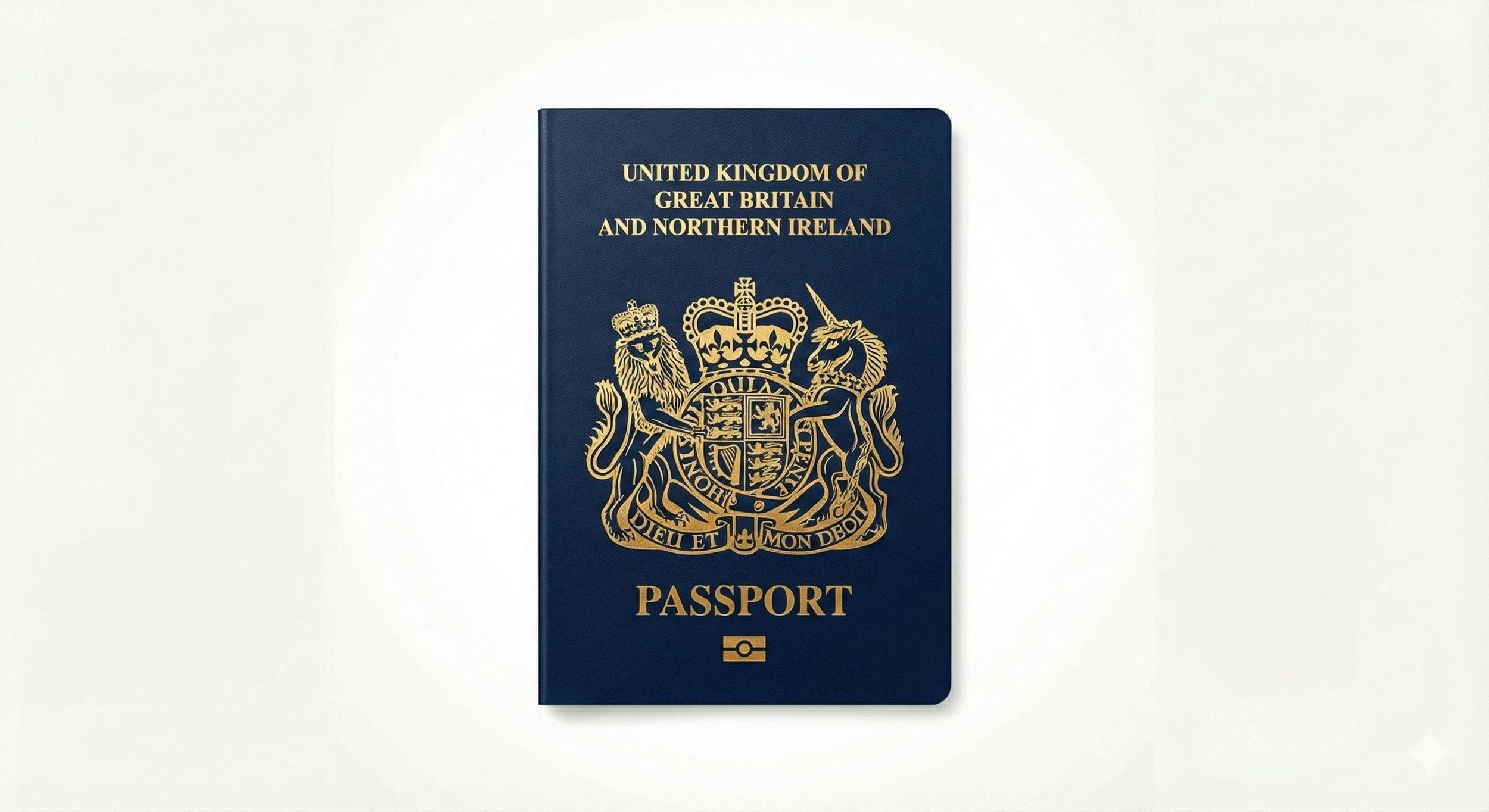
What Is Indefinite Leave to Remain?
Indefinite Leave to Remain is a form of permanent residency granted under the Immigration Act 1971. It removes most immigration controls, there is no time limit on the holder's right to remain in the UK, no restriction on employment or business activity, and no obligation to pay the Immigration Health Surcharge. ILR holders have access to the full range of NHS services and may access most public funds on the same basis as a British citizen.
ILR is granted at the end of a qualifying period of continuous lawful residence, 5 years for most routes, 3 years for Global Talent Exceptional Talent endorsees, and 10 years for the long residence route. It is not automatic: an application must be made, fees paid, and all eligibility criteria met at the time of the application.
What Does ILR Mean in Practice?
Unrestricted right to remain: No further visa applications or extension fees after ILR is granted.
Unrestricted employment: ILR holders may work in any role, be self-employed, or run a business without any immigration permission.
No Immigration Health Surcharge: The IHS is not payable on the ILR application and does not apply to ILR holders thereafter.
Pathway to citizenship: ILR is the mandatory prerequisite for naturalising as a British citizen. Spouses of British citizens may apply for naturalisation immediately on grant of ILR. All other routes require 12 months of holding ILR before naturalisation.
Digital status only: ILR is granted as a digital eVisa record linked to the holder's UKVI account. Biometric Residence Permits are no longer issued for ILR granted after December 2024.
ILR vs Settled Status: What Is the Difference?
ILR and Settled Status are functionally equivalent, both confer permanent residency in the UK with no time limit. The difference is in the route through which they are obtained and the name used.
Indefinite Leave to Remain (ILR) is the term used for permanent residency obtained through standard immigration routes, Skilled Worker, family, long residence, Ancestry, and others. ILR lapses if the holder is absent from the UK for more than 2 consecutive years.
Settled Status under the EU Settlement Scheme (EUSS) is the equivalent status for EU, EEA, and Swiss nationals (and their family members) who applied under the EUSS before it closed to new applications. Settled Status lapses after 5 consecutive years of absence rather than 2.
Both statuses are now held digitally as an eVisa. The practical rights and restrictions are identical. Where this guide refers to ILR, it covers all standard (non-EUSS) routes to permanent residency.
Does ILR Expire?
ILR itself does not have an expiry date, the status is indefinite. However, it can lapse and it can be revoked.
Can ILR Be Revoked?
Yes. Under Section 76 of the Nationality, Immigration and Asylum Act 2002, the Home Secretary may revoke ILR where the holder is liable to deportation for example, following a criminal conviction or where it is discovered that settlement was obtained through deception. Revocation is a serious action and is relatively rare, but it can occur and cannot be treated as a formality.
ILR in an Old or Expired Passport
Where ILR was originally granted as a physical wet-ink stamp in a passport that has since expired, the underlying status remains valid but the physical evidence cannot be verified by automated e-Gates, employer right-to-work checks, or landlord right-to-rent checks. In this situation a No Time Limit (NTL) application must be made to transfer the existing settled status onto the holder's UKVI digital record as an eVisa. This is not a new grant of leave, it is an administrative update to the digital record to reflect an existing right.
ILR Routes and Qualifying Periods
The qualifying period and specific requirements for ILR depend on the visa route the applicant has been on. The table below summarises the main routes.
ILR Qualifying Routes 2026
| Route | Qualifying period | Absence limit | Key notes |
|---|---|---|---|
| Skilled Worker | 5 years | 180 days per rolling 12 months | Salary must meet threshold at ILR stage |
| Health and Care Worker | 5 years | 180 days per rolling 12 months | Same as Skilled Worker route |
| Global Talent | 3 years (Exceptional Talent) or 5 years (Exceptional Promise) | 180 days per rolling 12 months | Must demonstrate continued activity in endorsed field |
| Scale-Up | 5 years | 180 days per rolling 12 months | 24-month PAYE earnings test applies |
| Spouse / Civil Partner | 5 years | No fixed limit — UK must remain primary home | Relationship must remain genuine and subsisting |
| Unmarried Partner | 5 years | No fixed limit | Cohabitation evidence required across full 5-year period |
| Parent of British or Settled Child | 5 years | No fixed limit | Active parental involvement must be maintained throughout |
| UK Ancestry | 5 years | 180 days per rolling 12 months | Must have worked throughout the 5-year period |
| Long Residence (10-year route) | 10 years | 180 days per 12 months; max 548 days total (pre-April 2024) | Current visa must have been held for at least 12 months |
| Global Business Mobility (all sub-routes) | Does not lead to ILR | N/A | Switch to Skilled Worker route for settlement |
ⓘ All routes require the Life in the UK Test, English at B1 CEFR (B2 from 26 March 2027), and Good Character under Part Suitability. The ILR fee is £3,226 per applicant regardless of route.
ILR Skilled Worker: The 5-Year Route
The Skilled Worker ILR route is the most commonly used settlement pathway for overseas workers in the UK. After completing 5 years of continuous sponsored employment under the Skilled Worker route, the applicant may apply for ILR provided they continue to meet the salary threshold applicable to their role at the time of the ILR application.
The salary threshold for ILR purposes is the same dual-lock test that applies to the original Skilled Worker visa: the general threshold (£41,700 from 22 July 2025) or the going rate for the SOC code, whichever is higher. An applicant whose salary met the threshold at the visa grant or extension stage but has since fallen below it for example due to a role change or salary reduction will not meet the ILR requirements.
From 8 January 2026, new Skilled Worker applicants must demonstrate English at B2 CEFR level. For ILR, the current requirement remains B1 CEFR, rising to B2 from 26 March 2027 for most applicants.
ILR Skilled Worker: The Absence Calculation
The 180-day rule requires that the applicant has not been absent from the UK for more than 180 days in any rolling 12-month period across the 5-year qualifying period. This is a rolling calculation, not a calendar year calculation. Each day of the 5-year period is assessed against the 180-day limit for the 12 months immediately preceding that day. An applicant who has taken several long holidays, a secondment abroad, or extended periods of overseas travel may exceed the limit without realising it. The calculation should be audited before the application is submitted.
ILR Long Residence: The 10-Year Route
The long residence route allows an applicant who has been continuously and lawfully resident in the UK for 10 years to apply for ILR, regardless of the combination of visa routes held during that period. It is the broadest settlement pathway in UK immigration law, available to applicants who have held a range of qualifying visas over the decade.
Which Time Counts Toward the 10 Years?
Most forms of leave to enter or remain count toward the 10-year qualifying period, including: Student visa and Tier 4 time; Graduate visa time; Skilled Worker and Tier 2 time; Global Talent, HPI, and Scale-Up time; family route leave (spouse, partner, parent, dependant child); Youth Mobility Scheme and most temporary work routes; and UK Ancestry visa time.
Time that does not count includes: Standard Visitor visa leave; Short-Term Student visa leave; Seasonal Worker visa leave; and any period of unlawful residence including overstays. A period of unlawful residence does not merely pause the clock, it breaks continuous residence entirely, restarting the 10-year calculation from the point lawful residence recommences.
The 12-Month Rule for the 10-Year Route
Absence Limits on the 10-Year Route
The absence limits on the long residence route are more complex than on the 5-year routes. For periods of residence accrued before April 2024, the applicant must not have been absent for more than 548 days in total across the 10-year period, and not more than 180 days in any single 12-month period. For periods accrued from April 2024 onwards, the standard 180-day rolling rule applies. Reconciling a decade of travel history is one of the most demanding aspects of a long residence ILR application.
ILR Family Routes: Spouse, Partner and Parent
ILR as a Spouse or Civil Partner
After completing 5 years of continuous leave as a spouse or civil partner, one initial entry clearance period of 33 months (30 counting toward the 5 years) and one FLR(M) extension of 30 months, the applicant may apply for ILR. The application must demonstrate that the relationship remains genuine and subsisting, that the financial requirement continues to be met, that the English language requirement is satisfied, and that the Life in the UK Test has been passed.
The financial requirement at the ILR stage for those who entered the partner route on or after 11 April 2024 is £29,000. Applicants who were on the partner route before that date benefit from the transitional rate of £18,600. At the ILR stage, the combined income of both the sponsor and the applicant may be used to meet the threshold.
Cohabitation Evidence at ILR Stage
The Home Office requires a specific portfolio of cohabitation evidence for the 30-month period since the last FLR(M) extension: six items of joint correspondence addressed to both partners at the same address, OR twelve individual items (six for each partner) at the same address, OR a combination of both. Evidence must be evenly distributed across the period with no significant gaps.
ILR as an Unmarried Partner
The same 5-year qualifying period, financial requirement, and English language requirement apply. The evidential burden for the unmarried partner ILR is higher than for the spouse route given the absence of a marriage certificate — a comprehensive cohabitation and relationship evidence pack spanning the full 5-year period is required.
ILR as a Parent of a British or Settled Child
The parent route ILR requires continued evidence of active parental involvement across the 5-year period: updated school records, medical involvement records, maintenance payment records, and evidence of ongoing contact and care. The financial requirement is the Adequate Maintenance Test rather than the £29,000 MIR.
ILR Global Talent and Other Routes
Global Talent ILR
Global Talent Exceptional Talent endorsees may apply for ILR after 3 years of continuous residence. Exceptional Promise endorsees must complete 5 years. At the ILR stage, the applicant must demonstrate that they have continued to work in their endorsed field throughout the qualifying period. The endorsing body may be asked to confirm this.
Scale-Up ILR
Scale-Up workers may apply for ILR after 5 years. Eligibility at the ILR stage requires demonstrating PAYE earnings of at least £39,100 for at least 24 months of the 5-year period. Earnings from self-employment do not count toward this threshold, only PAYE income is recognised.
UK Ancestry ILR
Commonwealth nationals who have completed 5 years on the UK Ancestry visa may apply for ILR. The applicant must have worked throughout the 5-year period, the Ancestry visa requires work as a condition of leave, and this must be maintained up to and including the ILR application date.
ILR Requirements: The Shared Eligibility Framework
Across all routes, ILR applicants must satisfy the following shared requirements in addition to any route-specific criteria.
Continuous Residence: The 180-Day Absence Rule
For all 5-year routes, absences must not exceed 180 days in any rolling 12-month period across the qualifying period. This is a rolling calculation, not a calendar year average. Every day of the qualifying period is assessed against the 180 days for the 12 months immediately preceding it. Exceeding the limit in any rolling window is a ground for refusal unless a discretionary exception applies on the basis of compelling or compassionate circumstances.
The 28-Day Early Application Rule
Good Character
All ILR applicants must satisfy the Good Character requirement under Part Suitability of the Immigration Rules. Key thresholds: custodial sentences of 12 months or more normally prevent settlement; pending criminal proceedings are a ground for refusal or postponement; tax discrepancies between income declared to HMRC and income previously declared to the Home Office are treated as deception matters; and outstanding NHS debt of £500 or more will block ILR.
English Language: B1 CEFR, Rising to B2 from 26 March 2027
English may be demonstrated through a Secure English Language Test from an approved SELT provider (Trinity College London or the IELTS SELT Consortium), a degree-level qualification taught in English verified by Ecctis, or by being a national of a majority English-speaking country. Exemptions apply for applicants aged 65 or over and those with a qualifying severe physical or mental condition.
Life in the UK Test
All ILR applicants aged 18 to 64 must pass the Life in the UK Test, a 24-question multiple-choice examination covering British history, traditions, law, and governance. The pass mark is 75% (18 out of 24 correct answers). The test costs £50 and must be taken at an approved test centre. The certificate does not expire.
ILR Fees 2026 and Processing Times
ILR fees and processing services — from 8 April 2026
| Application / service | Fee |
|---|---|
| ILR application fee (all routes, per applicant) | £3,226 |
| Priority service — decision within 5 working days | £500 (additional) |
| Super Priority service — decision next working day | £1,000 (additional) |
| Life in the UK Test | £50 |
| English language SELT test (approximate, varies by provider) | £150 to £200 |
| Immigration Health Surcharge (IHS) | Not payable — ILR is exempt |
ⓘ Fees correct from 8 April 2026. The ILR fee is non-refundable once processing has begun. There are no fee waivers on grounds of financial hardship. Priority services are charged per applicant and are subject to availability.
ILR Processing Times
Standard processing for an in-country ILR application is up to 6 months from the date of biometric enrolment. Priority processing is available at an additional cost, Priority service targets a decision within 5 working days; Super Priority service targets a decision the next working day. Both priority services are subject to availability and are charged per applicant, not per household.
During the processing period, the applicant retains the right to work and reside in the UK under Section 3C leave, provided the ILR application was submitted before the current leave expired. The applicant should not travel outside the UK during the processing period as this may withdraw the application.
ILR vs Settled Status: The Digital Record
All ILR and Settled Status granted since the transition to the digital immigration system is held as an eVisa, an electronic record on the UKVI system. There is no physical document. ILR holders share their status with employers, landlords, and others using a digital share code generated through the UKVI online service.
For applicants who hold legacy evidence of ILR, a wet-ink stamp or BRP card from before the digital era, the No Time Limit (NTL) application transfers the existing settled status onto the UKVI digital record. This is an administrative process and not a new grant of leave. It is essential for anyone still holding only physical evidence of their ILR, as automated border systems, employer right-to-work checks, and landlord right-to-rent checks cannot interrogate physical stamps.
If ILR Lapses: The Returning Resident Visa
Where ILR has lapsed due to more than 2 consecutive years of absence, the applicant cannot re-enter the UK as a settled resident. The only legal pathway to recovery is the Returning Resident visa under Appendix Returning Resident of the Immigration Rules.
The Returning Resident visa is a discretionary entry clearance application. The Home Office assesses four primary factors: the length of the original period of lawful residence in the UK before the absence; the reasons for the absence and whether they were unavoidable; the strength of the applicant's remaining ties to the UK during the absence (family, property, financial interests); and the genuineness of the intention to return to the UK permanently. If the application is successful, the applicant is granted Indefinite Leave to Enter (ILE), which is functionally equivalent to ILR and restores their settled status.
After ILR: British Citizenship
ILR is the prerequisite for British citizenship by naturalisation. Spouses and civil partners of British citizens may apply for naturalisation immediately upon the grant of ILR, provided the 3-year residency requirement is met. All other ILR holders must wait 12 months from the date ILR is granted before applying for naturalisation.
The naturalisation application fee is £1,709 plus a £130 ceremony fee, total £1,839 from 8 April 2026. The naturalisation requirements include English at B1 CEFR, the Life in the UK Test, and meeting the Good Character requirement. Absence limits for naturalisation are calculated separately from the ILR qualifying period.
Frequently Asked Questions
How much does indefinite leave to remain cost in 2026?
The ILR application fee is £3,226 per applicant from 8 April 2026, up from £3,029. This applies to every applicant individually, dependants applying at the same time pay the full £3,226 each. Priority service adds £500; Super Priority adds £1,000. The Life in the UK Test costs £50. The Immigration Health Surcharge is not payable on ILR applications.
Does indefinite leave to remain expire?
ILR does not have an expiry date, but it lapses automatically if the holder is absent from the UK for more than 2 consecutive years. Settled Status under the EU Settlement Scheme lapses after 5 consecutive years of absence. If ILR has lapsed, a Returning Resident visa must be applied for from outside the UK before re-entering as a settled resident.
What is the ILR processing time?
Standard processing is up to 6 months from the date of biometric enrolment. Priority service targets a decision within 5 working days at an additional cost of £500 per applicant. Super Priority service targets a next-working-day decision at an additional cost of £1,000 per applicant. Both priority services are subject to availability and are charged per person.
What is the difference between ILR and Settled Status?
ILR and Settled Status are functionally identical, both confer permanent residency with no time limit. ILR is the term used for settlement obtained through standard immigration routes. Settled Status refers specifically to permanent residency obtained under the EU Settlement Scheme by EU, EEA, and Swiss nationals and their family members. The key practical difference is the absence lapse period: ILR lapses after 2 consecutive years outside the UK; Settled Status lapses after 5 consecutive years.
What is the ILR English language requirement?
The current ILR English language requirement is B1 CEFR, speaking and listening. From 26 March 2027, this rises to B2 CEFR for most routes. English may be demonstrated through an approved SELT test, a degree taught in English, or by nationality from a majority English-speaking country.
Can ILR be revoked?
Yes. ILR may be revoked under Section 76 of the Nationality, Immigration and Asylum Act 2002 where the holder is liable to deportation following a criminal conviction, or where it is established that the original settlement was obtained through deception. Revocation is serious and relatively uncommon, but it is a live legal power the Home Office exercises.
What is the ILR skilled worker route?
Skilled Worker ILR requires 5 years of continuous sponsored employment under the Skilled Worker route, meeting the applicable salary threshold throughout and at the point of the ILR application, no more than 180 days' absence in any rolling 12-month period across the 5 years, English at B1 CEFR (B2 from 26 March 2027), the Life in the UK Test, and Good Character. The application fee is £3,226 per applicant.
What is the 10-year long residence ILR route?
The long residence route allows settlement after 10 years of continuous lawful residence in the UK, combining most qualifying visa types. Time on a Standard Visitor visa, Short-Term Student visa, or Seasonal Worker visa does not count. Any period of unlawful residence breaks the continuous residence clock. Where the current visa was granted on or after 11 April 2024, it must have been held for at least 12 months before the ILR application is submitted.
What is a No Time Limit (NTL) application?
An NTL application transfers legacy physical evidence of ILR, a wet-ink stamp or old BRP onto the UKVI digital record as an eVisa. It is not a new grant of leave. It is necessary for anyone who holds only physical evidence of their settled status, as automated border systems and right-to-work or right-to-rent checking services cannot process physical stamps.
Discuss Your Immigration Legal Strategy
Meet Our Team
Bill Zahr
Principal Lawyer & Managing Director
Bill Zahr (LLB Hons) leads Noble Rose Immigration Service with a methodical, "law-first" approach. Guided by the ethos ‘Navigare per Legem’, Bill combines rigorous legal expertise with genuine empathy to navigate complex UK immigration cases. Formerly of a top-tier UK firm, he ensures every client receives transparent, elite, and personalised care.
Renzel Carlos
Client Relations Manager & Immigration Paralegal
Renzel Carlos (LLB Hons, First Class) is the primary liaison at Noble Rose Immigration Service. Currently undertaking the Bar Vocational Studies (BVS) programme, she combines a meticulous legal foundation with deep frontline experience. Renzel is dedicated to guiding clients through the emotional complexities of immigration with high-level professionalism, precision, and compassionate care.