
Director-Employee Paradox
Written by Bill Zahr
Last Updated 26 January 2026
Navigating the Legal Architecture of Self-Sponsorship in 2026
Executive Summary
An analysis of "Self-Sponsorship" as an application of the Skilled Worker Visa for entrepreneurs. It explores the tension between corporate personality and the Home Office’s "Genuineness of Vacancy" test.
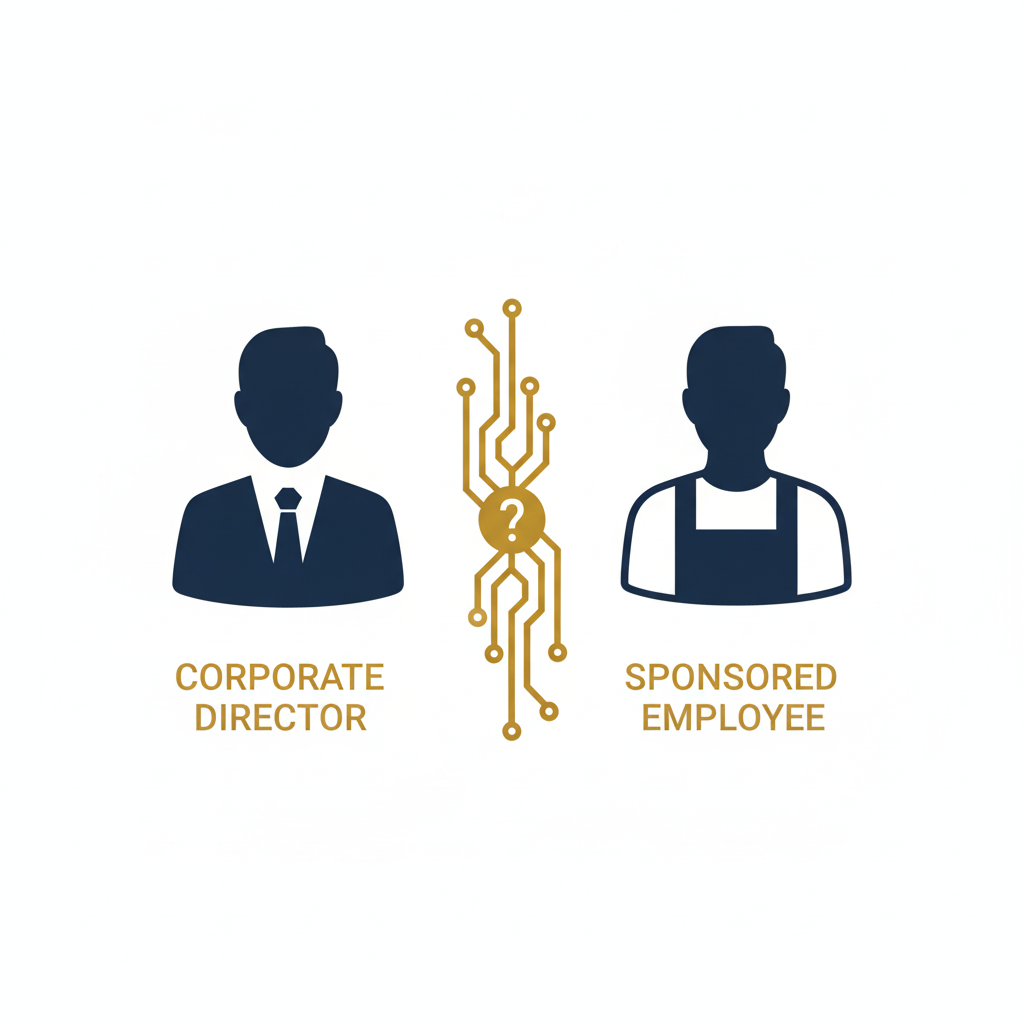
Success requires a distinct corporate structure where an independent Authorising Officer manages compliance. A Self-Sponsorship Immigration Lawyer is required to prove the "Genuine Operating Presence" of the UK entity.

We deconstruct the 2026 B2 English Standard and the exclusion of equity from salary calculations. This guide provides the blueprint for building a compliant UK institution that survives intense Home Office scrutiny.
The term "Self-Sponsorship" has gained significant traction in the 2026 UK business landscape, yet it remains a legal misnomer that requires careful deconstruction through the lens of corporate and immigration law. Strictly speaking, the UK Immigration Rules do not contain a "Self-Sponsorship" category. Instead, what is commonly referred to as self-sponsorship is the strategic application of the Skilled Worker Visa route, where an entrepreneur establishes a UK corporate entity which then acts as a separate legal person to sponsor its own director. This article provides a theoretical and statutory analysis of the legal architecture required to navigate this paradox, focusing on the "Genuineness of Vacancy" test and the strictures of Appendix Skilled Worker.
Doctrine of Corporate Personality in Immigration Law
The foundational legal principle making self-sponsorship possible is the doctrine of "Separate Corporate Personality," famously established in Salomon v A Salomon & Co Ltd [1897] AC 22. Under UK law, a limited company is a distinct legal entity, separate from its shareholders and directors.
In the context of Business Immigration, this separation is the pivot upon which a successful application turns. The Home Office does not sponsor an individual; it licenses an entity. Therefore, the "Sponsor" is the UK company, and the "Migrant" is the individual. The legal challenge in 2026 is ensuring that the Home Office does not "pierce the corporate veil" to conclude that the entity is merely an alter-ego of the individual, created for the sole purpose of circumventing immigration control.
Jurisprudence of the "Genuineness of Vacancy" Test
In 2026, the "Genuineness Test" has become the primary battleground for entrepreneurial visa applications. The Home Office's power to refuse an application based on genuineness is rooted in the "General Grounds for Refusal" and specific provisions within Appendix Skilled Worker.
Analytical Framework (Post-2025 Case Law)
Recent jurisprudence, including the 2025 High Court findings in R (Prestige Social Care Services Ltd) v SSHD, has clarified that a vacancy can be found "not genuine" even in the absence of deliberate dishonesty. The court established a two-limb test:
Definitional Limb: Does the role actually require the worker to perform the duties of the specified SOC 2020 code?
Operational Limb: Is the role appropriate to the business in light of its scale, business model, and the "genuineness of the need" for a full-time employee in that capacity?
For an entrepreneur, the operational limb is the most dangerous. If a startup with zero revenue sponsors its sole director at a salary of £60,000, the Home Office will often conclude the role is "not genuine" because the business model cannot rationally support the overhead.
Subjective Credibility Assessment
Unlike the mechanical salary threshold tests, the genuineness assessment is subjective. Caseworkers are instructed to look for "roles created or tailored" for the applicant. In self-sponsorship, the role is, by definition, tailored for the founder. To overcome this, a Self-Sponsorship Immigration Lawyer must construct a "Business Justification" that proves the role exists independent of the founder's identity—i.e., that any person with those specific skills would be required for the company to achieve its stated objectives.
2026 Statutory Requirements: Raising the Bar
As of 08 January 2026, the entry requirements for the Skilled Worker route have been significantly tightened, reflecting the government's "Restoring Control" white paper.
English Language Uplift (CEFR B2)
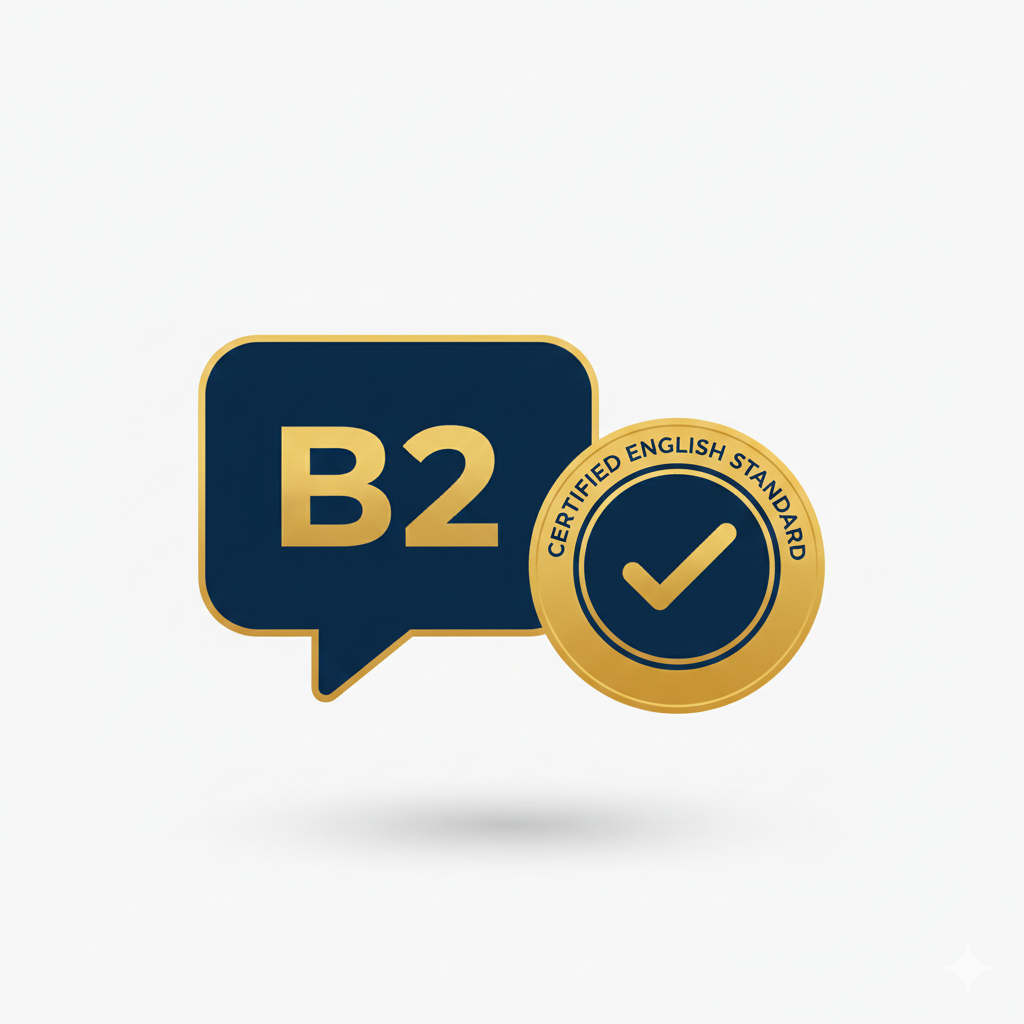
A critical 2026 update is the increase in the English language requirement. While the previous standard was B1 (intermediate), all new Skilled Worker applicants must now demonstrate a B2 level (upper-intermediate) on the Common European Framework of Reference for Languages. This is a significant hurdle for international founders from non-majority English-speaking countries. Failure to provide a valid Secure English Language Test (SELT) at the B2 level results in a mandatory Sponsor Licence Application Refusal.
2026 Salary Thresholds
The general threshold for the Skilled Worker route in 2026 is £41,700. However, for a director-level role (typically SOC 1115 or 1131), the "Going Rate" is often significantly higher.
Equity as Salary? A common legal error is attempting to count equity or stock options toward the salary threshold. Under the Immigration Rules, only "guaranteed gross basic pay" is counted. Dividends, director's loans, and future equity tranches are strictly excluded.
Conflict of Interest and the Authorising Officer
One of the most complex aspects of a Sponsorship Licence Application for an entrepreneur-led company is the appointment of "Key Personnel."
Role of the Authorising Officer (AO)
The AO is the person responsible for the company’s compliance with its sponsorship duties. The Home Office guidance states that the AO should be a "senior person" within the organization. In a self-sponsorship scenario, if the applicant appoints themselves as the AO, they are effectively certifying their own compliance—a clear conflict of interest in the eyes of the regulator.
Independence Requirement
To mitigate the risk of a refusal, the corporate governance structure must provide for a degree of "Independent Oversight." This often involves:
Appointing a UK-based "Settled" (Citizen or ILR holder) director or senior manager as the AO.
Engaging an external Corporate Immigration Lawyer to act as a Level 1 User on the Sponsorship Management System (SMS).
If the Home Office determines that the AO has no "real control" over the applicant (because the applicant is the 100% shareholder), they may conclude that the sponsorship structure is a "sham."
Appendix A: Evidencing the "Genuine Operating Presence"
To obtain the licence, the company must prove it is a "genuine and lawfully operating business" under Appendix A. In 2026, the Home Office has moved away from accepting "shell companies."
Mandatory Documents
For a startup, the "Appendix A" list usually requires at least four of the following:
Corporate Bank Account: A current account with a UK bank registered by the FCA/PRA.
Employer’s Liability Insurance: Cover of at least £5 million.
HMRC Registration: Evidence of registration for PAYE and National Insurance.
VAT Registration: Or evidence of a turnover approaching the threshold.
Business Premises: A lease or title deed. "Virtual offices" are frequently rejected for companies intending to sponsor staff.
Business Plan as a Legal Document
In self-sponsorship, the Business Plan is not just a commercial pitch; it is a legal evidence document. It must prove that the company is "viable" and "capable of carrying out its sponsor duties." This includes having the liquidity to pay the mandated £41,700+ salary for the duration of the visa.
Paradox of "Right to Work" for a Founder
Under the Immigration, Asylum and Nationality Act 2006, it is a criminal offense to employ someone who does not have the "Right to Work" in the UK. This creates a difficult sequence for the entrepreneur:
The company must exist.
The company must be "operating" to get a licence.
The founder must manage the company to make it "operate."
But the founder cannot "work" (i.e., manage) until they have the visa.
Legally, this is managed by distinguishing between "Investor/Shareholder actions" and "Employee actions." A founder can perform "statutory director" duties (attending board meetings, filing accounts) without a visa, but they cannot engage in the "day-to-day operation" of the business (hiring staff, selling products, selling services) until the Certificate of Sponsorship is assigned and the visa is granted. Navigating this "pre-licence" phase without breaching immigration law is a task requiring meticulous legal planning.
Reporting Obligations and the Director's Duty
Once the licence is granted and the visa is issued, the company enters the "Post-Licence Compliance" phase. The reporting obligations are particularly strict for companies where the sponsored worker is also a significant shareholder.
10-Day Clock and SMS Accuracy
Every change must be reported on the SMS within 10 working days. For a director, this includes:
Changes in work location (e.g., the company moving to a larger office).
Significant changes in job duties (e.g., moving from "Operations Manager" to "CEO").
Any reduction in salary (which is only permitted in very narrow statutory windows).
"Loss of Control" Risk
If the founder-director decides to sell a portion of the company or take on venture capital, this must be reported within 20 working days as a "Change of Ownership." A change in majority control often requires a Sponsor Licence Applicationfor a new licence, as the original "trust-based" relationship was with the previous owners. Failure to manage this transition is a common trigger for a Sponsor Licence Revocation.
"High Earner" and "Expansion" Alternatives
While the Skilled Worker route is the most common for self-sponsorship, we also analyze the Global Business Mobility (GBM) routes for entrepreneurs.
Expansion Worker: Ideal for those with an existing overseas parent company. It avoids the need for a UK-based AO initially but caps the stay at 2 years and does not lead to settlement.
Senior or Specialist Worker: Requires a salary of £52,500 and is for internal transfers only.
For many founders, the Skilled Worker route is preferred specifically because it provides a direct Path to UK Citizenship. However, this path is only secure if the "Compliance Fortress" around the company is maintained.
Integration of HMRC and Home Office Data
In 2026, "Compliance" is no longer an annual check; it is a real-time data stream. The Home Office receives monthly reports from HMRC's Real-Time Information (RTI) system.
The "NMW" Trap: If a director decides to "forego" their salary in a difficult month to save the company cash, they are in breach of both the National Minimum Wage and the Immigration Rules.
The Discrepancy Alert: If the PAYE data does not match the Certificate of Sponsorship, an automated "Discrepancy Alert" is sent to the Home Office compliance team. This is often the trigger for a Sponsor Licence Compliance Audit, where officers will examine the "Genuineness" of the role with renewed skepticism.
Self-Sponsorship "Defense Pack"
To protect a founder's visa status, the company must maintain a "Defense Pack" that goes beyond standard HR files. This includes:
Proof of Independence: Evidence that the Authorising Officer has the authority to terminate the founder's employment if they breach company policy.
Market Benchmarking: Evidence that the founder's salary is at the "market rate" for their role, proving it is a genuine commercial arrangement rather than an immigration sham.
Client Contracts: Signed agreements showing that the company is actively trading and has a "Genuine Need" for a director with the applicant’s specific skillset.
Moving from Entrepreneurship to Legal Architecture
Self-sponsorship is one of the most sophisticated maneuvers in UK Immigration Law. It requires a total alignment of corporate law, employment law, and the Immigration Rules. The Home Office's increased focus on "Genuineness" and "Compliance" in 2026 means that founders cannot afford to treat the process as a "DIY" administrative task.
A single error—selecting an incorrect SOC 2020 code, failing to appoint an independent Authorising Officer, or miscalculating the "Hourly Floor"—does not just lead to a visa refusal. It leads to the loss of the Sponsor Licence, the potential curtailment of the founder’s stay in the UK, and a "cooling-off" period that can bar the founder from the UK for 12 months.
By engaging a specialist Business Immigration counsel to architect the corporate structure, founders move from a position of "administrative risk" to "strategic legal certainty." We don't just help you apply for a visa; we help you build a compliant UK institution that serves as the foundation for your global success.
Key Services
✔ Sponsor Licence Application
✔ Sponsor Licence Renewal
✔ SMS Management & CoS Allocation
✔ Skilled Worker Visas
✔ Compliance Advisory
✔ Mock Audits
Need Corporate Immigration Legal Services?
-
Yes, there is an administrative review available only if there was a caseworker error.
-
No statutory right of appeal exists; however, you can often request a "Sponsor License Review" if there was a caseworker error.
-
Usually until the investigation is complete, which can take several weeks or even months.
-
Yes, but you are prohibited from assigning any new Certificates of Sponsorship (CoS).
-
A suspension is a temporary "freeze" during an investigation; a revocation is the permanent cancellation of your license.
-
No, the Authorising Officer must be a permanent, UK-based employee of your company.
-
A formal request for the Home Office to reconsider a visa refusal if you believe a mistake was made during the assessment.
-
By submitting a robust "Representation" document that addresses the auditor's findings with counter-evidence within 20 working days.
-
A mandatory 12nd-month period where you are banned from re-applying for a license following a revocation.
-
Ideally before an audit occurs, though immediate help is needed as soon as a "Notice of Intent to Suspend" is received.
-
We provide "Direct Advocacy and Resolution." We specialise in drafting expert Representations to the Home Office to challenge suspension notices and handling Administrative Reviews to overturn incorrect sponsor licence refusals. We act as your professional shield, managing the high-stakes communication required to keep your licence active.
Stay Connected. Follow Us On.