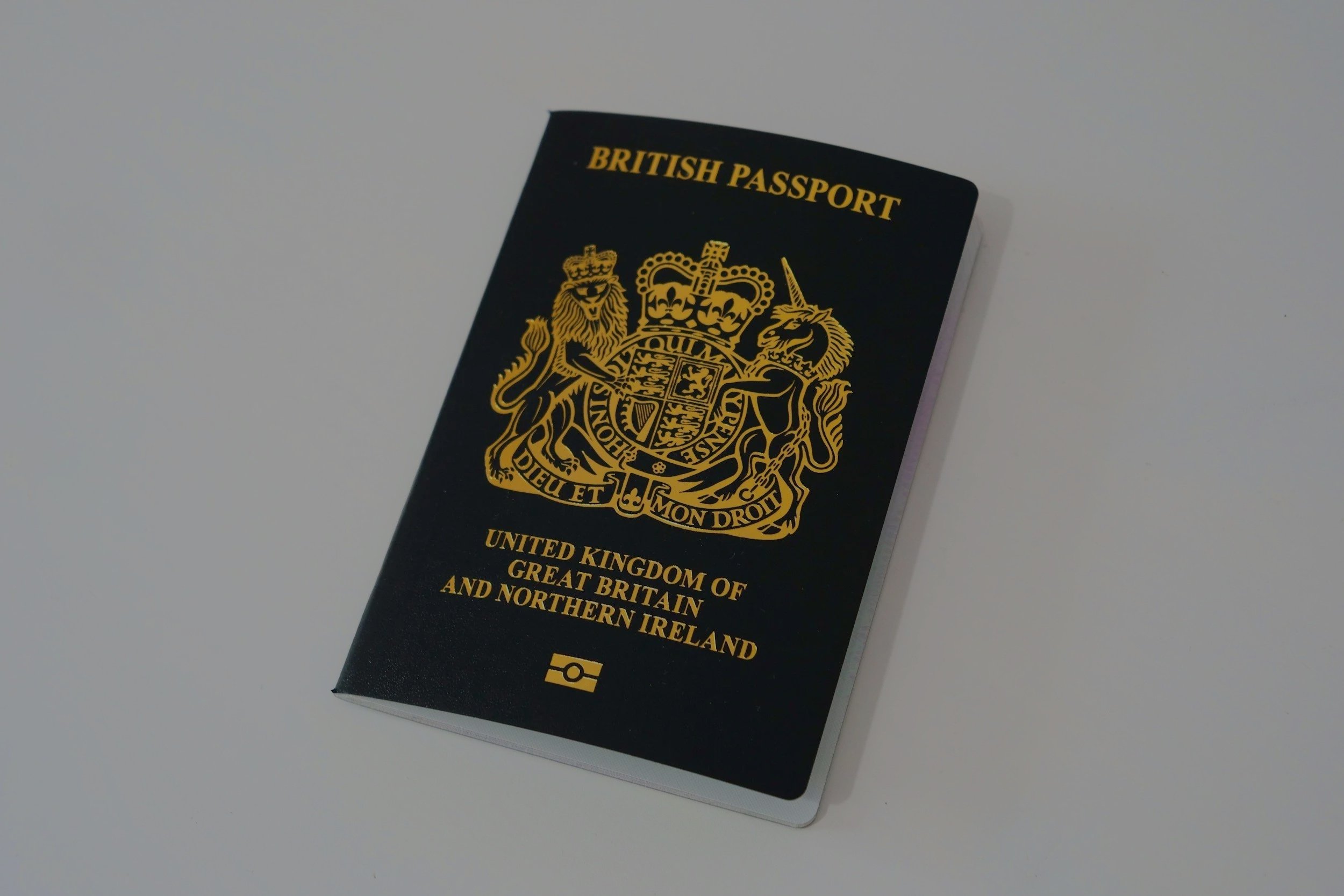
British Naturalisation: From ILR to Becoming a British Citizen (2026 Guide)
Written on 23 October 2025 by Bill Zahr
Updated on 11 April 2026 by Renzel Carlos
Securing ILR indefinite leave to remain is a monumental achievement, but it is not the end of the immigration journey. For individuals who have spent years navigating the complexities, costs, and anxieties of the UK immigration system, securing your status as a British Citizen naturalisation applicant remains the absolute pinnacle. It is the most secure, definitive, and permanent form of immigration status available in the United Kingdom.
For individuals who already hold indefinite leave to remain in the UK or EU Settlement Scheme (EUSS) Settled Status, transitioning from a permanent resident to a fully naturalised British national provides unshakeable long-term stability. It grants the absolute right to live, work, study, vote, and travel as a UK national, entirely free from the jurisdiction of UK Visas and Immigration (UKVI).
In the context of the 2026 immigration landscape where the Government is actively proposing to extend indefinite leave to remain new rules and tighten immigration controls across the board many long-term residents are realising that simply holding ILR is no longer secure enough.
At Noble Rose Immigration Service, a strictly IAA-regulated immigration law firm, we provide elite, compliance-first legal representation for individuals seeking to formalise their allegiance to the UK. This exhaustive 2026 legal guide breaks down the exact british naturalisation UK requirements, the strict mathematical absence calculations, the unforgiving Good Character test, and the strategic roadmap to securing your British passport.
What is British Naturalisation? (Citizenship vs. ILR)
When clients ask us about their final steps, they often ask about the specific legal mechanism of naturalisation as a British Citizen.
British naturalisation is the formal legal process through which a non-British national acquires citizenship under the statutory framework of the British Nationality Act 1981.
A frequent question we receive is: "If I already have indefinite leave to remain United Kingdom status, why do I need to pursue British citizenship naturalisation?"
While ILR allows you to live and work in the UK permanently, it is still a conditional immigration status. You remain a foreign national subject to UK immigration control. ILR can be lost, revoked, or cancelled. For example, if an ILR holder leaves the UK for a continuous period of more than two years (or five years for EUSS Settled Status), their permanent residency automatically lapses. Furthermore, if an ILR holder commits a serious criminal offense, they remain liable for deportation.
Naturalisation of British Citizen status fundamentally changes your constitutional relationship with the state. Once granted, British citizenship by naturalisation is absolute and permanent (unless explicitly renounced or deprived in exceptionally rare cases of treason).
Exclusive Rights of a British Citizen
Acquiring naturalisation British citizenship grants profound rights that ILR does not, including:
The Right to a British Passport: One of the most powerful travel documents in the world, granting visa-free or visa-on-arrival access to over 190 countries.
Full Democratic Rights: The absolute right to vote in all UK local, national and general elections, and the right to run for public office or sit in Parliament.
Absolute Protection from Deportation: You can never be deported from the United Kingdom.
Unrestricted Global Mobility: You can leave the UK for ten years, live abroad and return whenever you wish without ever losing your status.
Generational Citizenship: The ability to automatically pass British citizenship down to any children born after your british nationality naturalisation.
Standard 5-Year Route to Naturalisation
The legal criteria to become British by naturalisation are rigid. For the vast majority of applicants (who are not married to a British citizen), you must apply under the standard 5-year route. To succeed in your British naturalisation application, you must satisfy five distinct statutory hurdles.
12-Month ILR Holding Period
You cannot simply apply British naturalisation the day you receive your ILR. By law, you must be entirely free from immigration time restrictions for at least 12 full months before the Home Office receives your naturalisation application. This means you must have physically held your ILR Biometric Residence Permit (BRP) or Settled Status eVisa for exactly one year.
5-Year Lawful Residence and Absences Rule
You must prove that you were physically present in the UK exactly 5 years before the date your application is received. Furthermore, the Home Office heavily scrutinises your international travel. To meet the statutory residence requirements, you must demonstrate:
Total Absences: No more than 450 days outside the UK across the entire 5-year qualifying period.
Final Year Absences: No more than 90 days outside the UK in the final 12 months immediately preceding your application.
How are absences counted? The Home Office only counts "whole days" outside the UK. The day you depart the UK and the day you arrive back in the UK do not count as absences.
If you have slightly exceeded the 450-day or 90-day limits (for example, due to overseas business travel or a family bereavement), the Home Office does possess discretionary power to overlook excess absences, up to certain limits. However, invoking this discretion requires drafting highly complex, evidence-backed legal representations.
Accelerated 3-Year Route (Married to a British Citizen)
If you are married to, or in a civil partnership with, a British citizen at the time you submit your naturalisation for british citizen application, the statutory requirements are significantly accelerated and much more forgiving.
No 12-Month Waiting Period
If you are married to a British citizen, you are entirely exempt from the 12-month ILR holding period. The exact day your apply for indefinite leave to remain application is approved, you become immediately legally eligible to submit your citizenship application.
3-Year Lawful Residence and Absences Rule
Instead of evaluating your travel over five years, the Home Office only looks at the last three years. The mathematical limits are also adjusted:
Total Absences: No more than 270 days outside the UK across the 3-year qualifying period.
Final Year Absences: No more than 90 days outside the UK in the final 12 months immediately preceding your application.
You must still prove you were physically present in the UK on the exact day three years prior to the application date.
Unforgiving "Good Character" Requirement
When evaluating naturalisation as british citizen, the "Good Character" test is undeniably the most complex, unforgiving, and frequently litigated aspect of the entire process.
Unlike a standard visa extension, naturalisation is a privilege, not an absolute right. The Home Secretary must be entirely satisfied that you are of "good character." This assessment goes far beyond simply conducting a criminal background check; it is a holistic evaluation of your financial probity, your respect for UK laws, and your general conduct.
Criminal Convictions and Driving Offences
Any unspent criminal convictions will almost certainly lead to a mandatory refusal. However, even minor infractions matter deeply for naturalisation.
Driving Offences: Receiving a single fixed penalty notice for speeding will not automatically bar you from citizenship. However, if you have received multiple fixed penalty notices, or if you have a recent driving conviction that resulted in points on your license or a court fine, the Home Office may refuse your application on the grounds of a "persistent disregard for the law."
Financial Conduct: HMRC and Debt
The Home Office actively cross-references naturalisation applications with His Majesty’s Revenue and Customs (HMRC).
Tax Evasion: Any history of deliberate tax evasion, failing to declare income, or submitting fraudulent tax returns is an automatic refusal.
Debt and Bankruptcy: While simply being in debt is not a bar to citizenship, having unpaid, outstanding debts to the National Health Service (NHS), unresolved Civil Court Judgments (CCJs), or a recent, undischarged bankruptcy will trigger a Good Character refusal.
Immigration History Breaches
Your entire immigration history in the UK will be forensically audited. If you previously worked illegally, accessed public funds when prohibited, or overstayed a visa (even if that overstay was later forgiven by the Home Office when they granted your ILR), it can be weaponized against you.
Knowledge of Language and Life in the UK (KoLL)
To become a British citizen, you must prove that you are integrated into the linguistic and cultural fabric of the nation.
Life in the UK Test
All applicants must take and pass the "Life in the UK" test. This is a computerized, multiple-choice examination covering British history, politics, geography, and legal systems. You must score 75% or higher at an official Home Office testing center. (Note: If you already passed this test to secure your ILR, you do not need to take it again).
English Language Requirement
You must prove your English proficiency. Currently, you must demonstrate speaking and listening skills to at least Level B1 on the CEFR scale. You must pass a Secure English Language Test (SELT) at an approved provider. You are exempt from sitting a new test if:
You are a national of a majority English-speaking country.
You hold a degree that was taught or researched in English (verified by Ecctis).
"Future Intentions" Rule
This is a unique, often overlooked statutory requirement specific to naturalisation British citizen applications. Under the British Nationality Act 1981, applicants utilizing the standard 5-year route must state their intention to make the UK their principal home.
If the Home Office discovers that you are planning to emigrate immediately after securing your British passport, or if you have accepted a permanent employment contract overseas while your British naturalisation application is pending, your application will be refused. You must intend to live in the UK. (Interestingly, if you are applying via the accelerated 3-year route because you are married to a British citizen, this "future intentions" requirement does not legally apply).
Dual Nationality: Do You Have to Give Up Your Passport?
A massive psychological barrier for many applicants is the fear of losing their original national identity.
The legal position of the United Kingdom is absolute: The UK fully recognises and permits dual (and multiple) nationality. When you receive your British naturalisation certificate, the Home Office will not ask you to surrender your current passport. You can legally hold both passports and travel freely between your two nations.
The Crucial Warning: While the UK permits dual nationality, your home country might not. Certain nations have strict laws prohibiting dual citizenship. If you acquire British citizenship, your home country may automatically revoke your original citizenship. It is your absolute responsibility to check the nationality laws of your home country before you apply.
Financial Reality: Home Office Fees
When budgeting for your application, understanding the cost of british naturalisation is critical. Unlike visa applications, there is no Immigration Health Surcharge (IHS) for naturalisation, but the baseline administrative fees are high.
As of 2026, the standard Home Office fee for british naturalisation includes:
The Naturalisation Application Fee: £1,709 per adult applicant (this is a newly updated fee as from 08 April 2026).
Citizenship Ceremony Fee: £130 (Paid upfront during the application).
This brings the total mandatory British naturalisation fee to approximately £1,839 per adult. If the Home Office refuses your application because you failed the Good Character test or miscalculated your absences, the £1,630 application fee is completely non-refundable.
The Noble Rose Representation Process: Securing Your Future
Given the exorbitant non-refundable Home Office fees and the terrifying complexity of the Good Character and absence rules, applying for British naturalisation without expert legal representation is a severe financial risk.
At Noble Rose Immigration Service, our immigration lawyer utilise a flawless, four-step VIP representation process to ensure your application is audit-proof before it ever reaches a caseworker.
Step 1: Elite Eligibility Review
We do not simply fill out forms. We conduct a forensic, chronological audit of your entire immigration history. We mathematically calculate your 450-day and 90-day absences, cross-referencing your passport stamps and flight records to ensure absolute statutory compliance. We also conduct a deep-dive interview regarding your financial and driving history to preempt any Good Character red flags.
Step 2: Evidence Compilation and Strategy
We provide you with a bespoke, personalized Supporting Documents Checklist. We do not rely on generic templates. If you have excess absences or a minor traffic offense, we actively compile mitigating evidence to build a robust legal defense.
Step 3: Legal Drafting and Submission
We draft meticulous legal representations (a formal lawyer’s cover letter) arguing exactly why you meet the statutory criteria under the British Nationality Act 1981. We upload your supporting document bundle, schedule your biometric appointment, and act as your sole legal representative in all communications with the Home Office.
Step 4: Decision and The Citizenship Ceremony
Once your application is approved, the final step is attending your formal Citizenship Ceremony at your local council. During this ceremony, you will swear an Oath of Allegiance and pledge your loyalty to the United Kingdom. Only after this ceremony is completed will you receive your official british certificate of naturalisation, allowing you to finally apply for your British passport.
Why Are ILR Holders Choosing to Naturalise Now?
The UK immigration landscape has experienced extreme, rapid volatility. If you monitor indefinite leave to remain uk news, you will know that the Government is openly consulting on extending ILR qualifying periods to 10 years and introducing strict "contribution tests" for settlement.
While ILR provides a strong form of residency, it is ultimately a temporary truce with the Home Office. In periods of aggressive legislative uncertainty, long-term residents are recognizing that leaving their status vulnerable to future policy changes is an unacceptable risk.
Common Reasons to Naturalise in 2026:
Absolute Protection: Immunity from future UK immigration law changes and border control policies.
Generational Security: The ability to automatically pass British Citizenship down to future generations.
Global Mobility: Safe, unrestricted global travel without ever worrying about the "2-year absence rule" invalidating your status.
Career Advancement: Immediate access to high-security civil service jobs and roles requiring absolute British Nationality.
Conclusion: Accessible, Transparent Legal Fees
We recognise that many applicants considering British Naturalisation have already invested tens of thousands of pounds into the UK immigration system over the last five to ten years. You have paid years of exorbitant visa fees and IHS surcharges.
We believe that the final step to citizenship should not be financially exploitative. At Noble Rose Immigration Service, we structure our legal fees to be entirely fair, transparent, and accessible.
We offer:
Fixed-Fee Legal Representation: You will know exactly what our services cost from day one.
Zero Hidden Charges: No surprise hourly billing or hidden administrative costs.
Reduced Legal Fees for Straightforward Cases: If your application has zero excess absences and a flawless Good Character history, our fees reflect the streamlined nature of your case.
British Naturalisation remains the most secure, definitive, and beautiful route to securing your permanent status in the United Kingdom. Do not leave the final, most important application of your life to chance or guesswork.
Contact our IAA-regulated immigration lawyers today to safeguard your family's future and take the final step toward becoming a British Citizen.
Discuss Your Immigration Legal Strategy
Meet Our Team
Bill Zahr
Principal Lawyer & Managing Director
Bill Zahr (LLB Hons) leads Noble Rose Immigration Service with a methodical, "law-first" approach. Guided by the ethos ‘Navigare per Legem’, Bill combines rigorous legal expertise with genuine empathy to navigate complex UK immigration cases. Formerly of a top-tier UK firm, he ensures every client receives transparent, elite, and personalised care.
Renzel Carlos
Client Relations Manager & Immigration Paralegal
Renzel Carlos (LLB Hons, First Class) is the primary liaison at Noble Rose Immigration Service. Currently undertaking the Bar Vocational Studies (BVS) programme, she combines a meticulous legal foundation with deep frontline experience. Renzel is dedicated to guiding clients through the emotional complexities of immigration with high-level professionalism, precision, and compassionate care.